
Robotics Integration
Robots are the easy part. Making them fit your operation is the work.
We source service and industrial robots from established manufacturers, then do the part that actually decides whether a deployment succeeds: integrating them with the systems you already run, training your people, and supporting the fleet afterwards.
Across the market, hardware accounts for only about 40–60% of what a first-year robot deployment costs. The rest is integration, network and systems work, commissioning and training. That is the half most suppliers leave to you — and the half we have been doing for thirteen years.
Where robots earn their keep
Restaurants & cafés
Food-running and bussing robots that carry trays between kitchen and table, freeing staff for service rather than walking.
- Multi-tray delivery and tray return
- POS-triggered dispatch to a table number
- Peak-hour routing that avoids aisles in use
Indicative hardware: US$6,500 – $20,000 per unit, or subscription from roughly $270–$1,000 / month.
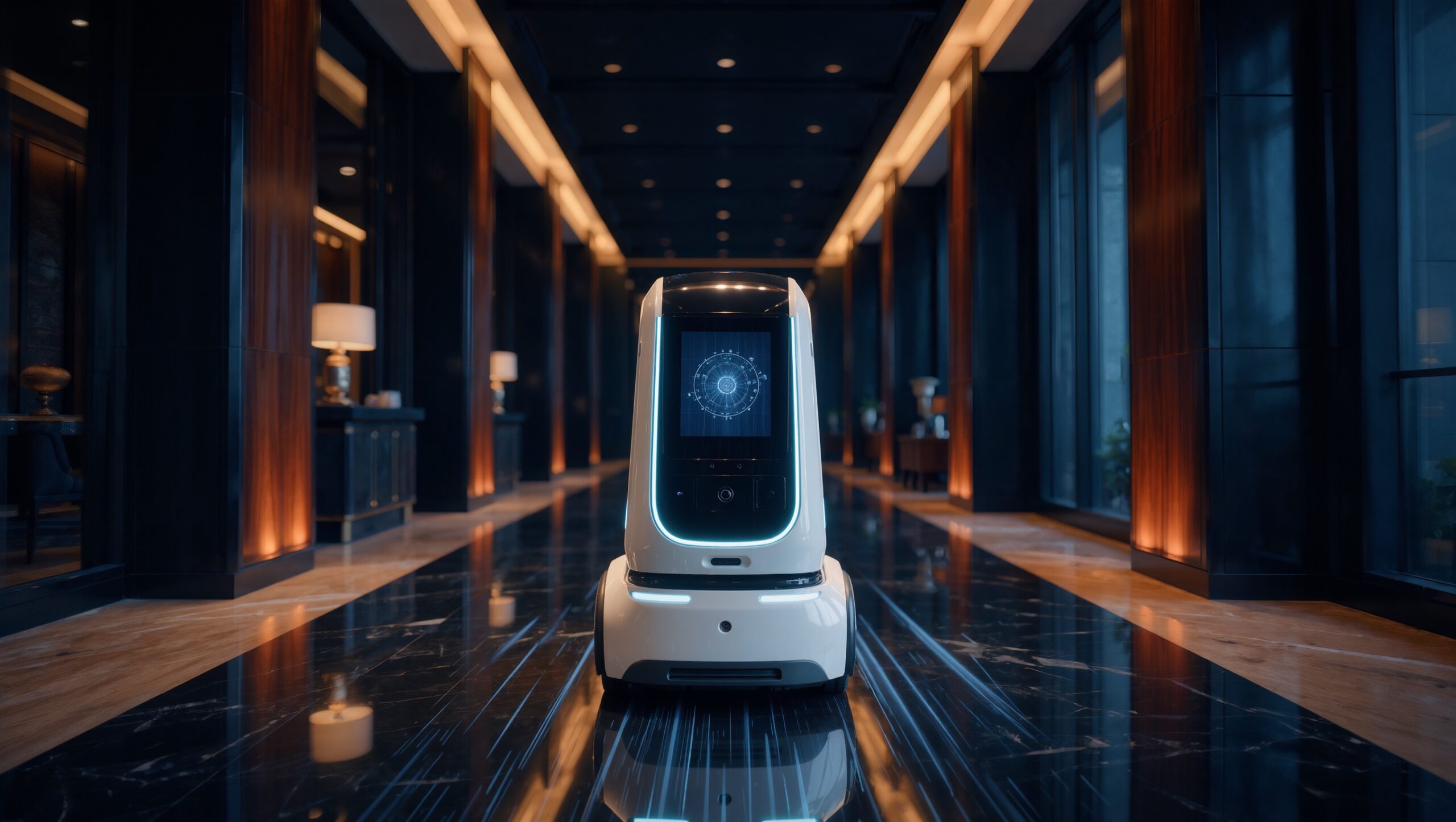
Hotels & hospitals
Enclosed, lockable delivery robots that call the lift themselves and complete multi-floor drops without a staff escort.
- Lift and access-control integration
- PMS integration — room service raised against the folio
- Guest notification by SMS or WhatsApp on arrival
Indicative hardware: US$8,000 – $20,000 per unit.
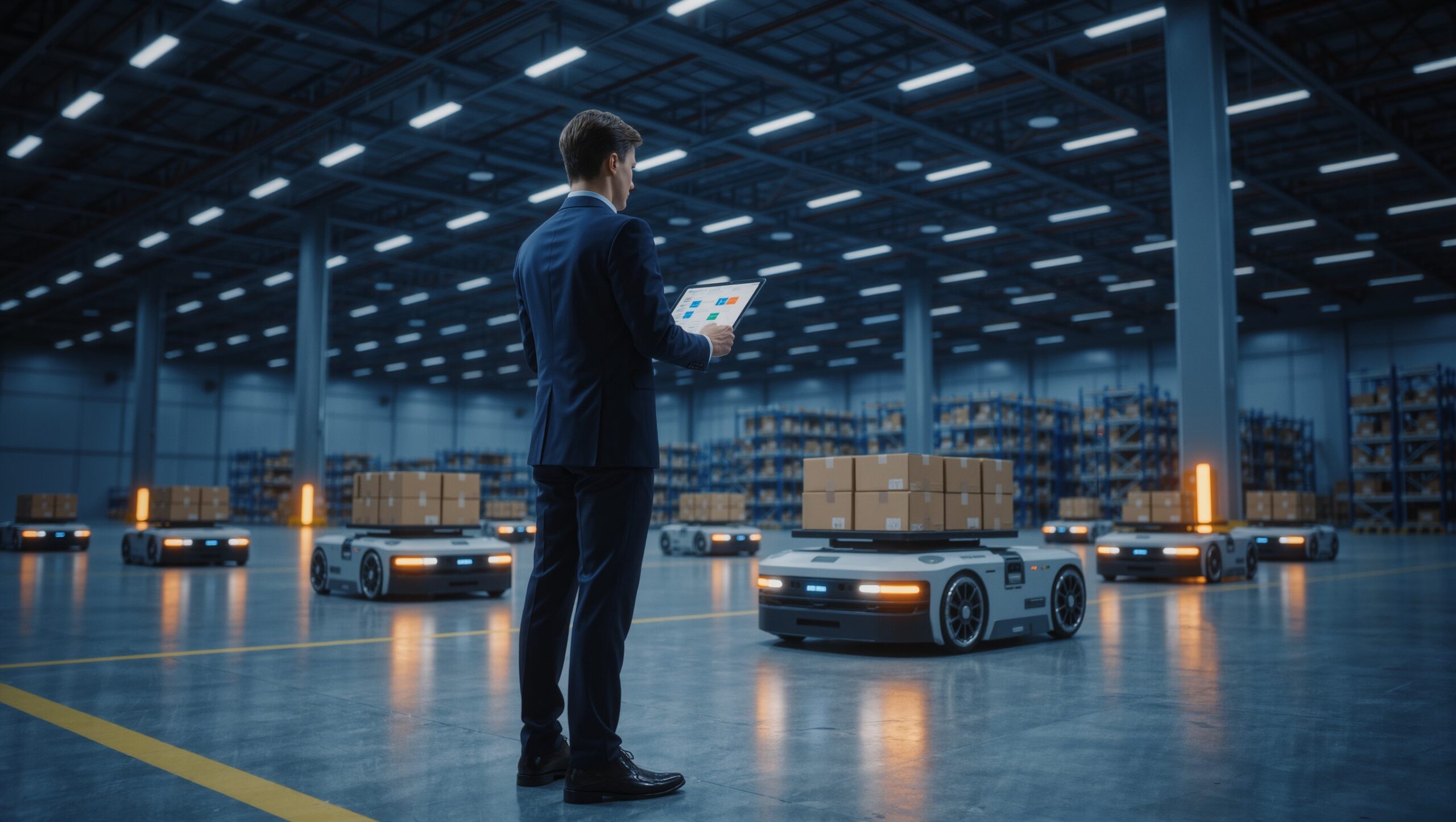
Factories & warehouses
Autonomous mobile robots and guided vehicles for internal material movement, replacing trolley runs and fixed conveyors.
- WMS / ERP integration so moves follow real orders
- Fleet traffic management across shifts
- Pick-face replenishment and line-side feeding
Indicative hardware: AGV US$15,000 – $75,000, AMR US$25,000 – $150,000 per unit.
Figures above are indicative market ranges for planning only, current as of 2026, and vary with configuration, volume, duties and destination. We quote your actual project after the assessment stage — no obligation.
The integration layer is what we build
Systems integration
The robot has to talk to what you already run — POS, PMS, WMS, ERP, ticketing, access control. We build and own those interfaces.
Fleet software & dashboards
One view of every unit: utilisation, battery, faults, jobs completed, exceptions needing a human. Data you can hold a supplier to.
Workflow & SOPs
Written operating procedures, exception handling and floor-staff training in your language, so the robot survives its first bad week.
Supply & commissioning
Sourcing, import documentation, delivery, on-site mapping, commissioning and handover — a single accountable contract.
Support & spares
Monitoring, firmware updates, spare-part logistics and a response commitment. The deployment does not end at go-live.
Pilot before scale
Start with one or two units against measured baselines. Scale only once the numbers hold. We would rather prove it than sell it.
How a deployment runs
- Assess — we walk the site, measure the trips your staff actually make, and say plainly whether robots are worth it.
- Specify — duty cycle, payload, floor and lift constraints, integration points, and a costed configuration.
- Pilot — one or two units, integrated and measured against the baseline from stage one.
- Integrate — interfaces to your systems, fleet dashboard, SOPs and staff training.
- Scale — roll out across floors, shifts or sites once the pilot numbers justify it.
- Support — monitoring, updates, spares and a named point of contact.
Typical payback on a well-scoped deployment runs 12–36 months, driven by utilisation. If the assessment says your case does not reach that, we will tell you at stage one rather than stage five.
Thinking about robots on your floor?
Start with an assessment. We measure the real trips, model the payback, and tell you honestly whether it is worth doing.
Book an assessment