
Software for Logistics
In logistics the goods move faster than the information about them. A lorry leaves the yard and, until the driver phones in, the office is guessing. The customer guesses too, and rings to ask.
Software closes that gap when it is designed around how the depot really operates: patchy mobile signal, shared handheld devices, paperwork that must travel with the load. We build dispatch, tracking and warehouse tools for operators whose process does not match a packaged transport management product, or who need their existing products connected.
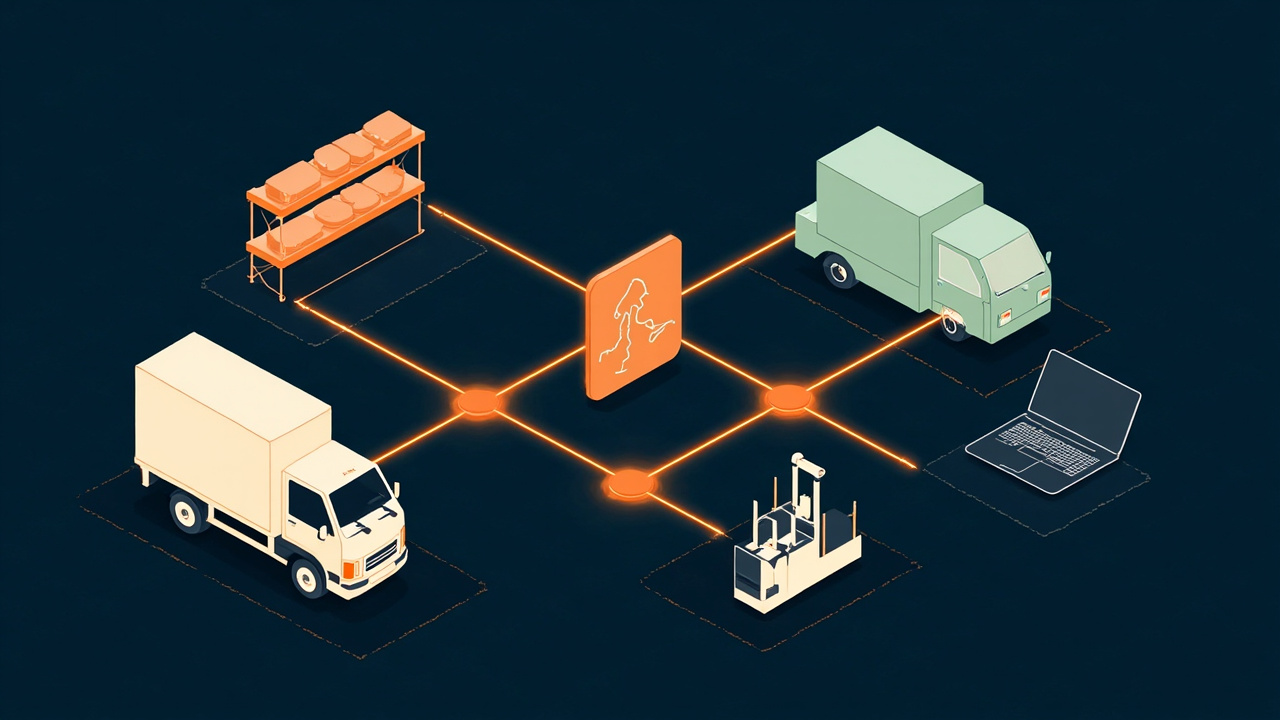
Operational problems worth solving in code
Routes planned on a whiteboard
A dispatcher assigns jobs from memory. When that person is on leave, vehicles run half empty or cross paths.
No answer to a simple status query
Customers ask where their consignment is, and staff telephone the driver to find out.
Delivery notes lost in the cab
Signed paper returns days later, or never. Invoicing waits for it, and disputes cannot be settled.
Stock that the system cannot find
A pallet was put away in the wrong bay and the record was not updated, so pickers walk the aisles searching.
Rates worked out by hand
Quotes depend on weight, volume, zone, fuel surcharge and customer contract, and live in a workbook only one person trusts.
Partners who send data in every format
Bookings arrive by EDI from one customer, spreadsheet from another and email from a third, and each is keyed in manually.
Tools for yard, road and warehouse
Dispatch board
Jobs, vehicles and drivers on one screen, with drag-and-drop assignment and warnings for overloaded vehicles or missed time windows.
Driver app
Job list, navigation hand-off, barcode scan, photo and signature capture. It stores data on the device and sends it when signal returns.
Customer tracking page
A link showing status and an estimated arrival, fed by scans and vehicle position, so the telephone rings less.
Warehouse management
Goods-in, put-away, picking and dispatch driven by handheld scanners, with every movement tied to a location and a user.
Rating and invoicing
Contract tariffs held as rules, applied automatically to completed jobs, and passed to your accounting package.
Partner integrations
EDI messages in EDIFACT or X12, courier and carrier APIs, and telematics feeds translated into one internal format.
How a logistics build proceeds
Short stages, each of which leaves you with something usable.
Walk the depot
A paid discovery, on site or by video, follows a consignment from booking to invoice and records every hand-off.
Pick a narrow pilot
One depot, one route or one customer account. Small enough to fix quickly, real enough to prove the idea.
Build and show
A demonstration every fortnight. Drivers and warehouse staff try the screens themselves, since they will find faults managers miss.
Widen the roll-out
Further sites are added one at a time, with the data migrated and the devices set up before each switch.
Pass it over
Code, documentation and device set-up notes go to you. Continued support is available by monthly retainer.
Matters you must rule on before we design
Requirements come from your transport manager, customs agent and legal adviser. We implement what they specify. Inspection and certification rest with the authorities and your auditor.
Driver hours and recording devices
Tachograph rules in Europe and electronic logging devices in the United States limit what an app may record and how.
Transport documents and tax
E-way bills and e-invoices under GST in India, consignment notes elsewhere, and whether an electronic version is accepted.
Customs filings
Declarations, commodity codes and security pre-arrival data for cross-border movements, usually sent through an approved intermediary.
Dangerous goods
ADR for road in Europe, the IMDG Code at sea and IATA regulations by air. Software must not allow a prohibited combination to be loaded.
Tracking people, not only vehicles
Location data about a driver is personal data. Employment and privacy law decide when it may be collected and who may view it.
Labelling standards
GS1 shipping labels and serial container codes, if your customers or carriers expect them.
Build, or buy a transport system off the shelf?
Commission software when
- Your pricing or routing rules are unusual and customers value them.
- You run products that work well alone and badly together.
- A supervisor can release drivers and pickers for testing.
- You want to extend the system yourself in later years.
Buy a packaged product when
- You run a standard parcel or pallet operation.
- The fleet is small enough for a subscription tool to cover it.
- You need route optimisation research, which is a specialist field.
- There is no budget for upkeep after launch.
Points operators raise
Will the app work without signal?
It should, and that has to be designed from the first day. Jobs are downloaded at the start of the shift, scans and signatures are queued on the device, and conflicts are resolved when it reconnects.
Can you use the vehicle trackers we already have?
If the telematics supplier offers an API or data feed, yes. If it does not, the phone in the cab can report position instead, within what privacy rules allow.
Which handheld scanners are supported?
Rugged Android devices with built-in scanners are the simplest to support. Ordinary phones using the camera work for low volumes.
What is the smallest engagement?
A retainer of 40 hours a month, billed monthly, with no long contract.
Follow one consignment and write down the steps
Send us that list, however rough, along with the products you use now. Someone from engineering writes back within one business day.