
Software for Banking and Finance
Established financial firms rarely lack software. They have too much of it: a core system from one decade, a loan platform from another, and a layer of spreadsheets and macros holding the two together. The risk sits in that layer, because nobody tested it and nobody owns it.
We build the applications that replace the layer. That means back-office tools, portals, reconciliation jobs and reports that sit around a core system without touching its internals. Controls are defined by your risk, security and compliance people. Our job is to implement them and show the evidence.
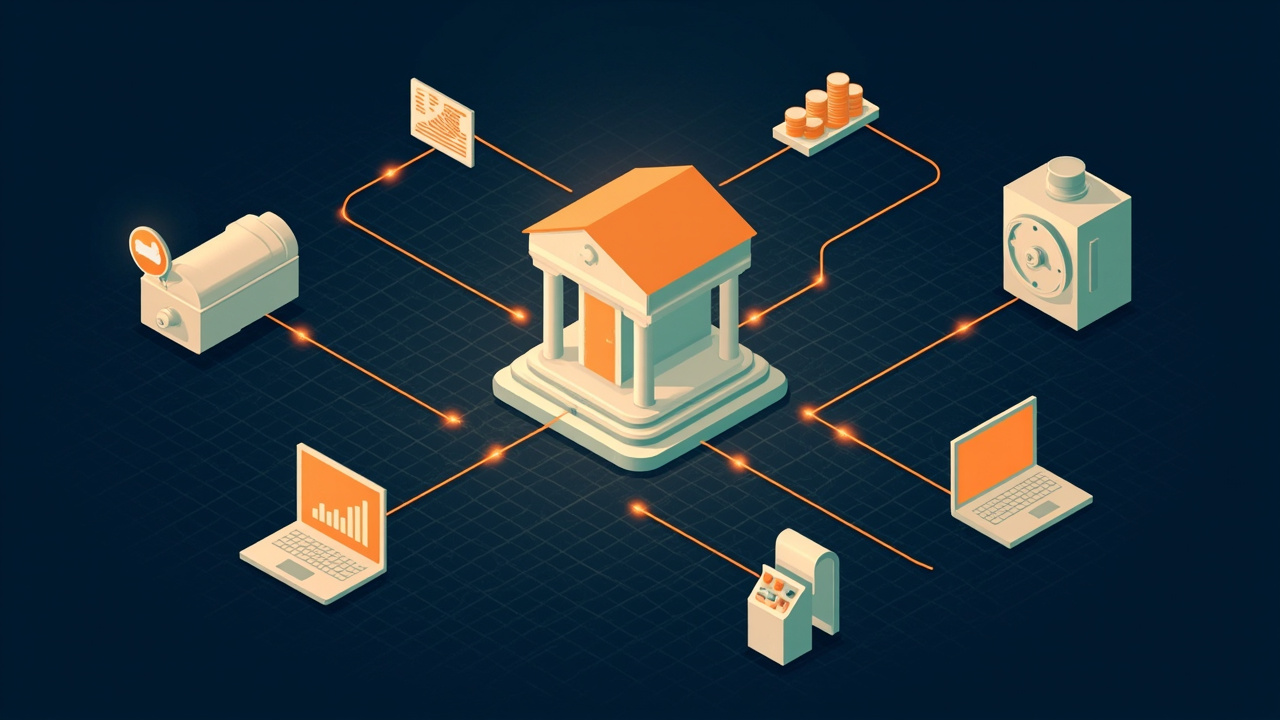
Applications a finance institution commissions
Core banking platforms are bought, not built. The work around them is where custom code belongs.
Loan origination screens
Application capture, document upload, credit-policy rules and an approval chain with limits by role, feeding the decision to the core platform.
Reconciliation engines
Matching ledger entries against statements, card settlements or custodian files, with unmatched items routed to a named person.
Customer and broker portals
Statements, balances, service requests and secure messages, with step-up authentication for sensitive actions.
Regulatory report builders
Scheduled extracts that assemble a return from several sources, keep the working, and record who approved the submission.
Collections and arrears tools
Work queues, promise-to-pay tracking and contact history, so an agent sees the whole account before dialling.
Treasury and cash dashboards
Positions across accounts and currencies refreshed during the day instead of compiled the next morning.
Rules your project will have to account for
This is a checklist of questions for your own advisers, not a list of our credentials. We hold no financial-sector certification and do not claim one. Assessment is performed by your auditor.
Your prudential and conduct regulator
The central bank or financial authority in each country you operate in, including its rules on outsourcing to a third party such as us.
Card data
PCI DSS applies if card numbers are stored, processed or transmitted. The cheapest decision is usually to keep them out of the new system altogether.
Anti-money-laundering duties
Customer due diligence, sanctions screening and transaction monitoring. Decide which checks the software performs and which stay with a specialist product.
Operational resilience
DORA in the European Union, and comparable expectations elsewhere, cover incident reporting, testing and supplier oversight.
Financial reporting controls
Listed groups answer to Sarbanes-Oxley or a local equivalent. Any tool that feeds the accounts needs change control and segregation of duties.
Message formats
ISO 20022 for payments, plus whatever your clearing scheme and correspondent banks require.
Data location and privacy
Several regulators require payment or customer data to remain in the country. Privacy law applies on top.
Habits we bring to financial code
Where your own policy is stricter than any of these, your policy wins.
- Every change read by a second engineer before it merges
- Money held as integers or decimals, never as floating point
- Automated tests around interest, fees and rounding
- No production data on developer machines
- Passwords and keys kept in a vault, outside the repository
- An append-only audit trail for approvals and overrides
- Releases tagged, with a written note of what changed
- Dependencies scanned for published vulnerabilities
Hourly rates for finance projects
Our rates are published. Pick the role and move the sliders for an indicative budget.
Rate card
| Role | Hourly | Monthly* |
|---|---|---|
| Frontend / WordPress | $30 | $4,800 |
| Backend / API | $32 | $5,120 |
| Full-stack | $35 | $5,600 |
| Mobile (React Native / Flutter) | $35 | $5,600 |
| DevOps / Cloud | $40 | $6,400 |
| AI / Automation engineer | $45 | $7,200 |
| QA / Test engineer | $25 | $4,000 |
| UI / UX design | $28 | $4,480 |
*160 hrs/month full-time. Rates are indicative for planning, in USD (other currencies are converted at an indicative rate), and depend on seniority, contract length and timezone overlap. Longer engagements and multi-role teams are discounted — ask.
Are we the right size of supplier?
Likely yes if
- The job is a defined tool, portal or report, with an owner in the business.
- Your security team can issue access and review our work.
- You are content with engineers working remotely from India.
- You prefer to hold the source code instead of licensing a product.
Likely no if
- You need a replacement core banking platform.
- Procurement requires the supplier to hold ISO 27001 or SOC 2 attestation today.
- Staff must work on your premises.
- The project has no sponsor who can decide scope.
Raised by risk, IT and procurement
How do your engineers reach our systems?
By whatever route your security policy allows: your VPN, a virtual desktop you provide, or a segregated development environment with synthetic data. We follow your joiner and leaver process for each person.
Will you complete a supplier security questionnaire?
Yes, and we answer it as things are. Where a control you need is missing on our side, it is better that you learn it from the questionnaire than from an incident.
Can the work be audited?
The repository history, review comments, test results and release notes all sit in your accounts, so your internal audit team can inspect them without asking us.
How does a project begin?
With a paid discovery that produces a scope, a data-flow diagram and a cost range. After that, a demonstration every two weeks.
What about legacy code in COBOL or on a mainframe?
We do not maintain mainframe code. We can build the service that talks to it through the files, queues or APIs it already offers.
Name the spreadsheet you would most like to retire
Say what it does, who relies on it and which systems feed it. Please send no customer data. An engineer answers within one business day.