
Software for Healthcare
A clinic runs on appointments, records, results and bills, and in many practices each of those lives in a different program. Staff bridge the gaps by retyping, printing and phoning. That costs hours every week and lets mistakes travel towards patients.
We write software for healthcare organisations that need those pieces joined up. We are engineers, not clinicians and not regulatory advisers, so the clinical rules and the legal requirements come from your side and we build to them.
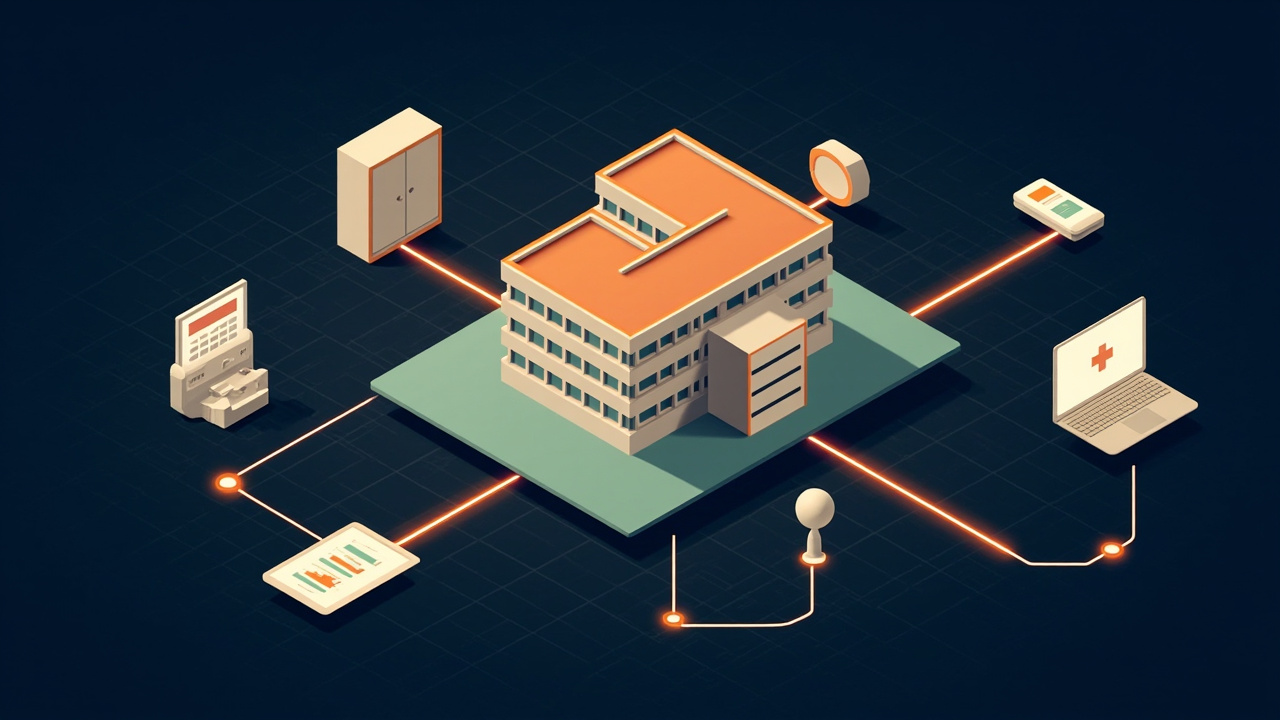
Where a practice loses its hours
None of these is dramatic on its own. Together they decide how many patients a team can see in a day.
Empty slots and double bookings
The diary is on one screen, cancellations arrive by phone, and nobody offers the freed slot to the waiting list in time.
Results that arrive as paper or PDF
A laboratory sends a document, a person reads it and types the values into the record. Each keystroke is a chance to get a decimal wrong.
One patient, three records
Reception, the clinical system and billing each hold their own copy of the address and the insurer. They drift apart within months.
Billing codes picked from memory
Claims bounce because a code was mistyped or a required field was blank, and the money arrives weeks later than it should.
Phone lines full of simple questions
Patients ring to move an appointment or ask whether a prescription is ready, because there is nowhere for them to look.
Software that addresses those problems
Most healthcare projects are one of the following, or two of them combined.
Scheduling and waiting lists
Rules for clinician availability, rooms and equipment, reminders by SMS or email, and automatic offers of cancelled slots.
Patient portals
A login where patients book, fill in forms before they arrive, read letters and pay invoices. Works on a phone without installing anything.
Interfaces between systems
Adapters that read HL7 v2 messages or call FHIR APIs, so a result or a demographic change is entered once and appears everywhere it is needed.
Operational dashboards
Live counts of waiting patients, bed or room use and overdue tasks, drawn from the systems you already run.
What you will need to decide
These decisions belong to you and your compliance adviser. We build to the requirements they write down. Audit and any certification are carried out by your auditor, not by us.
Which privacy law applies
HIPAA for patients in the United States, GDPR in the European Union and the United Kingdom, the Digital Personal Data Protection Act in India. Serving patients in two regions means meeting both.
Whether it counts as a medical device
Software that calculates a dose, interprets an image or suggests a diagnosis may be regulated as a device. Ask before design starts, because the answer changes the whole project.
Which exchange standards to use
HL7 v2 and FHIR for messages, DICOM for imaging, ICD-10 and SNOMED CT for coding. Some code sets need a licence in your name.
Where the data may be stored
Several countries restrict health data leaving their borders. The hosting region has to be chosen with that in mind.
Who may see which record
Roles, emergency override, and an access log that your privacy officer can actually read.
From first call to a working system
Requirements from your staff and your adviser are written into one document before any code.
Watch the work
During a paid discovery we follow a booking, a result and an invoice through your current systems and note every manual step.
Build in fortnightly slices
Every second week you are shown software that runs, populated with made-up patients, and you tell us what is wrong with it.
Go live beside the old way
A pilot with one clinic or one team first. The previous process stays available until staff trust the new one.
Hand over or stay on
You receive code, documentation and deployment notes. Upkeep can continue with us month to month, or pass to your own people.
Is custom software the right call here?
It probably is when
- Your record system is staying and you need something built around it.
- A named person on your side can answer clinical questions each week.
- You already have, or will appoint, someone responsible for compliance.
It probably is not when
- You are looking for a complete electronic record system. Buy an established one.
- You expect the developer to tell you what the law requires.
- The supplier of your core system allows no integration of any kind.
Asked by practice managers and IT leads
Do your developers see real patient records?
Not by default. Development and testing use invented data. If a fault can only be traced in the live system, you decide who is given access, for how long and under which agreement.
Can you connect to the record system we already use?
That depends on what its vendor exposes. Some offer a FHIR API or HL7 feeds, some only file exports, a few nothing at all. Discovery includes reading the vendor documentation so you know what is possible before paying for a build.
Will you sign off the software against HIPAA or GDPR?
No. Your adviser sets the requirements, we implement them and document how each one was met, and your auditor assesses the result.
Where will the system run?
In a cloud or server account opened in your organisation's name, in the region your adviser specifies. Nothing is hosted under an account of ours.
Tell us which hand-off hurts most
Describe the systems you run today and the step your staff complain about. Leave patient details out of the message. An engineer reads it and answers within one business day.